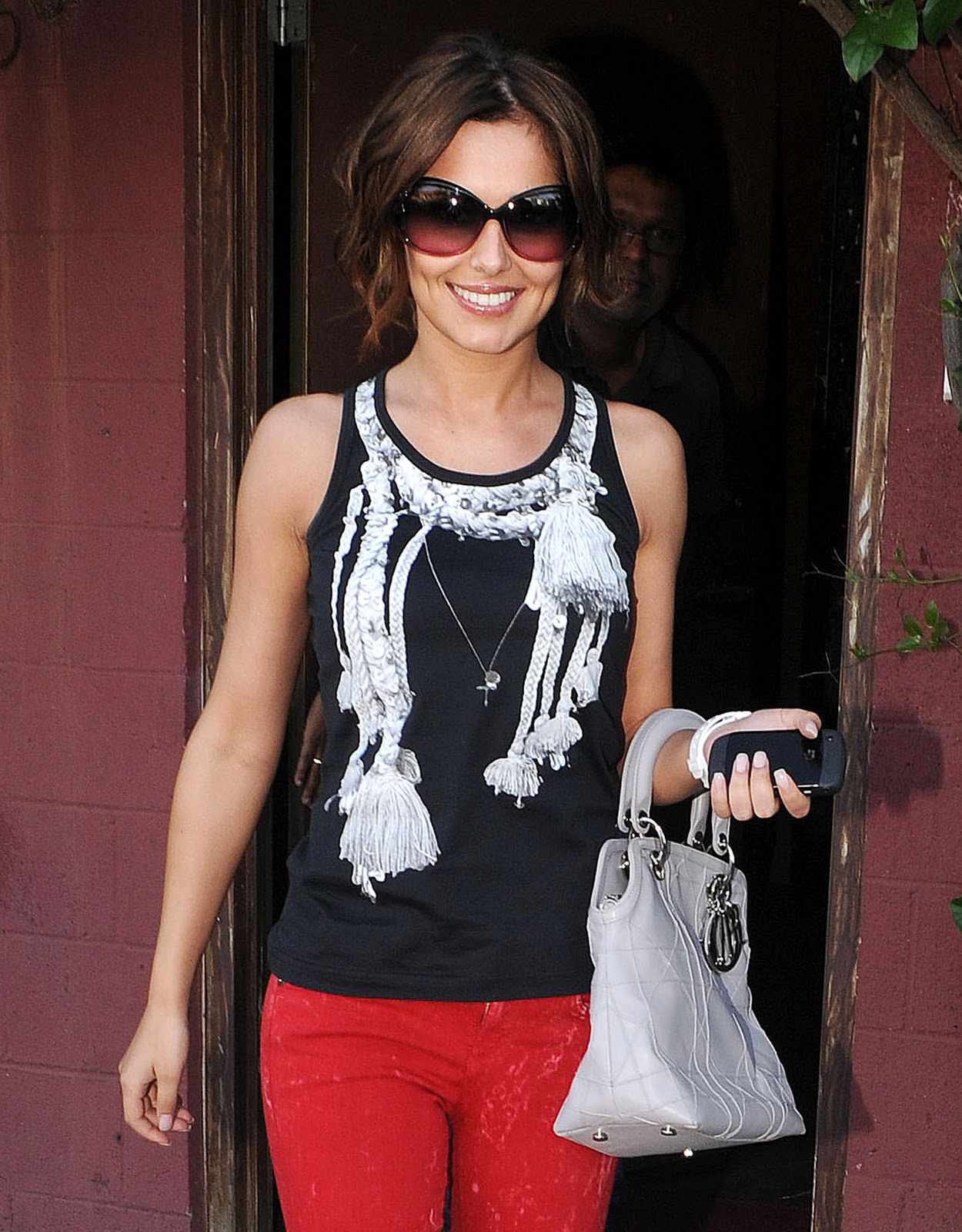
I finally got me some John Galliano 0001/s! The first model!!! Woohoo! In black and violet, just like on the ad!
Monday, November 7, 2011
Sunday, November 6, 2011
PRADA RELEASES JEWELRY
Those jewelry you saw on the Spring 2012 runway will hit stores this holiday season. It will surely make Anna Wintour happy. The styles are up there in her alley. It means it's kinda old. As Prada always is. I just feel that it's always matronly you know. But they do hit it with some girly looks but majority, ages 30 and up! :)
Saturday, November 5, 2011
OLIVIER THEYSKENS
If someone needs to release a couture line under his own name, it should be this guy and not Giambattista Valli. Sorry girl, I love Olivier Theyskens more!
Girl-about-town Natalie Joos spends her days casting for shows like ADAM and Yigal Azrouël and editorials for the likes of Mario Sorrenti and Mariano Vivanco, but her passion is vintage clothing. Joos’ blog, Tales of Endearment, spotlights her “Muses,” impeccably styled girls and guys who share her secondhand obsession. In a new partnership with Style.com, Tales of Endearment’s subjects discuss their shoots right here on Style File.
Fashion month is over, but Olivier Theyskens hasn’t slowed down for a second, except to eat a hamburger (or two) in Paris with Natalie Joos. After dining chez McDonald’s, the two fed their fashion appetites with vintage treasures. Though Theyskens tells Style.com he’s “not a designer that buys vintage to be inspired,” one thing is certain: Others will refer to his work for years to come. Some of it, like the dress from one of his early Rochas collections that they found on their shopping trip, is already archived in vintage shops on the racks among Miu Miu. “He is perplexed. He can’t believe he’s already vintage!” says Joos.
Theyskens took a break from a photo shoot in Paris to chat with Style.com about his vintage shopping guidelines and what’s next for Theyskens’ Theory, and confessed to having a lazy gene.
Because like everyone, I had to eat something. I think it’s OK to go once in a while. Sometimes it’s cool. I wouldn’t like to promote them or anything, but everyone can go rarely; but it’s important not to go often.
Once you ate, it sounds like you found some good finds. What did you buy?
I bought a bow tie for the Carine vampire party at an antique men’s shop. I also found a very old Mugler jacket that doesn’t look too old. It’s large, but that’s good because it doesn’t look so exaggerated that way.
So, what exactly do you look for when you vintage shop?
I like vintage that is not so dated. It’s interesting for me because in my work, a lot of times, I like to scrutinize the clothes and think what’s going to make them look dated and I do the same with vintage. In vintage, you want something unique and different, but at the same time, something that doesn’t make you look like you dress like a grandpa.
Where do you like to buy your vintage pieces?
I don’t go often. I am not a designer that buys vintage to be inspired. You can be sure if I travel and go to some weird place, I will see if they have a vintage store with tricky, interesting things. I went once to the Rose Bowl market in Los Angeles—it’s gigantic! I was just there, going around, and I had no idea what to buy. It was so overwhelming.
How is your personal style reflected in your work?
It’s complicated. In my personal style, I don’t go too crazy…maybe it’s my body. How I design is how I imagine (mentally) to wear things. I put myself in the place of people—tall, short, bigger, smaller, whatever. It has always been like that. I think that actors have to do this too. Of course, my own experiences have an impact on how I design things, for sure. A lot of times my girls have shoulders, probably because I have shoulders. My jackets, I imagine them on people with shoulders.
Do you have something you wear every single day?
I have some cute old boots that I have been wearing for years—it’s impossible to read the brand. They are totally ruined but I love them. Or like a jean, you find one and there is no other jean that will fit that good so you keep wearing it. I am always wearing jeans that I designed these days. The ones I am wearing are cleaner and darker—they are from last pre-fall. I was wearing this old pair from the time of Helmut Lang, with holes in them now, that I wear all the time and I could not stop wearing them.
Fashion month is over. What was your favorite moment from the season?
For me, the favorite moment was to arrive in Paris and have this amazing Indian summer. It’s not a high fashion, glamorous moment, but it was great. I have always been in New York during the summer and missed seeing Paris in the sunshine. This was really special, for sure.
What’s on the horizon for you right now?
I am going to travel to China and then I am going to be in NYC, going from time to time to Paris. In Asia, we are going to be involved with Lane Crawford, and we opened a store in Beijing a year ago, so it’s nice to go and see what’s happening there. All these projects are growing and it’s great—I am excited to get back to New York. When I’m there, in NYC, I’m really into everything.
How do you hope to expand your Theory collection next?
You always want to expand but you also think what you want to keep in and what you want to put out. It’s more an evolution. I am sometimes scared when there are too many projects. The experience I have with Theory, we want to be editing and have this evolving story. Expanding to us is being stronger in different markets and inspiring people to wear the clothes.
When you aren’t designing and working, what do you like to do for fun?
I like to be lazy. I do like to be busy and really active, but when that’s done, you can be sure I will be a lazy boy. I like to take time and relax and enjoy life.
Source: http://www.style.com/stylefile/2011/10/meet-the-muse-olivier-theyskens/
Girl-about-town Natalie Joos spends her days casting for shows like ADAM and Yigal Azrouël and editorials for the likes of Mario Sorrenti and Mariano Vivanco, but her passion is vintage clothing. Joos’ blog, Tales of Endearment, spotlights her “Muses,” impeccably styled girls and guys who share her secondhand obsession. In a new partnership with Style.com, Tales of Endearment’s subjects discuss their shoots right here on Style File.
Fashion month is over, but Olivier Theyskens hasn’t slowed down for a second, except to eat a hamburger (or two) in Paris with Natalie Joos. After dining chez McDonald’s, the two fed their fashion appetites with vintage treasures. Though Theyskens tells Style.com he’s “not a designer that buys vintage to be inspired,” one thing is certain: Others will refer to his work for years to come. Some of it, like the dress from one of his early Rochas collections that they found on their shopping trip, is already archived in vintage shops on the racks among Miu Miu. “He is perplexed. He can’t believe he’s already vintage!” says Joos.
Theyskens took a break from a photo shoot in Paris to chat with Style.com about his vintage shopping guidelines and what’s next for Theyskens’ Theory, and confessed to having a lazy gene.
—Kristin Studeman
I have to ask, why did you two pick McDonald’s as your meeting place? It seems like a very unexpected choice.Because like everyone, I had to eat something. I think it’s OK to go once in a while. Sometimes it’s cool. I wouldn’t like to promote them or anything, but everyone can go rarely; but it’s important not to go often.
Once you ate, it sounds like you found some good finds. What did you buy?
I bought a bow tie for the Carine vampire party at an antique men’s shop. I also found a very old Mugler jacket that doesn’t look too old. It’s large, but that’s good because it doesn’t look so exaggerated that way.
So, what exactly do you look for when you vintage shop?
I like vintage that is not so dated. It’s interesting for me because in my work, a lot of times, I like to scrutinize the clothes and think what’s going to make them look dated and I do the same with vintage. In vintage, you want something unique and different, but at the same time, something that doesn’t make you look like you dress like a grandpa.
Where do you like to buy your vintage pieces?
I don’t go often. I am not a designer that buys vintage to be inspired. You can be sure if I travel and go to some weird place, I will see if they have a vintage store with tricky, interesting things. I went once to the Rose Bowl market in Los Angeles—it’s gigantic! I was just there, going around, and I had no idea what to buy. It was so overwhelming.
It’s complicated. In my personal style, I don’t go too crazy…maybe it’s my body. How I design is how I imagine (mentally) to wear things. I put myself in the place of people—tall, short, bigger, smaller, whatever. It has always been like that. I think that actors have to do this too. Of course, my own experiences have an impact on how I design things, for sure. A lot of times my girls have shoulders, probably because I have shoulders. My jackets, I imagine them on people with shoulders.
Do you have something you wear every single day?
I have some cute old boots that I have been wearing for years—it’s impossible to read the brand. They are totally ruined but I love them. Or like a jean, you find one and there is no other jean that will fit that good so you keep wearing it. I am always wearing jeans that I designed these days. The ones I am wearing are cleaner and darker—they are from last pre-fall. I was wearing this old pair from the time of Helmut Lang, with holes in them now, that I wear all the time and I could not stop wearing them.
Fashion month is over. What was your favorite moment from the season?
For me, the favorite moment was to arrive in Paris and have this amazing Indian summer. It’s not a high fashion, glamorous moment, but it was great. I have always been in New York during the summer and missed seeing Paris in the sunshine. This was really special, for sure.
What’s on the horizon for you right now?
I am going to travel to China and then I am going to be in NYC, going from time to time to Paris. In Asia, we are going to be involved with Lane Crawford, and we opened a store in Beijing a year ago, so it’s nice to go and see what’s happening there. All these projects are growing and it’s great—I am excited to get back to New York. When I’m there, in NYC, I’m really into everything.
How do you hope to expand your Theory collection next?
You always want to expand but you also think what you want to keep in and what you want to put out. It’s more an evolution. I am sometimes scared when there are too many projects. The experience I have with Theory, we want to be editing and have this evolving story. Expanding to us is being stronger in different markets and inspiring people to wear the clothes.
When you aren’t designing and working, what do you like to do for fun?
I like to be lazy. I do like to be busy and really active, but when that’s done, you can be sure I will be a lazy boy. I like to take time and relax and enjoy life.
Source: http://www.style.com/stylefile/2011/10/meet-the-muse-olivier-theyskens/
Friday, November 4, 2011
Hudson Kroenig
Hudson Kroenig
Mini Model Extrordanaire & Lagerfeld Muse. New York(Narrated by Daddy Kroenig) Remember this punim? Let us refresh you. Hudson Kroenig is the adorable toddler who walked with his dad, Brad Kroenig—the inimitable muse to Karl Lagerfeld—in the Chanel S/S ’11 show. Matching from head-to-toe in a Canadian tuxedo and white Chanel jacket,—starting to come back now?—Hudson’s runway debut with daddy was only the beginning to his booming modeling career. Taking cues from dad—the Abercrombie & Fitch model-turned-Lagerfeld legend—little Hudson’s resumé reads like that of fashion’s veterans: he’s been shot by The Kaiser (numerous times!), graced the pages of German Vogue and posed as the face of Fendi alongside his dapper dad, Anja Rubik and Baptiste Giabiconi. Not bad for a 3-year-old, right? And it’s no surprise that as the face of Fendi, Hudson is repping hard—jacket, sweater, jeans, hat, shoes… you name it, he’s got it! Uncle Karl—who shot the Fendi campaign—really is like an uncle to Hud- gifting him stuffed mini Karl’s to cuddle with at night, visiting him in NYC and hanging with him in Europe. From catwalks to clothes, little H definitely knows a thing or two about style. It’s safe to say this kid has a bigger Nike kicks collection than any kid on the playground. Plus- he picks them out himself! But we’ve got to credit his good-looking dad for his keen sense of style and model material. Brad has fronted the campaigns for Chanel (duh!), H&M, DKNY and Canadian brand, Le Chateau. Muse and magnet to Uncle Karl’s camera, he has shot him for everything from Harper’s Bazaar to the Pirelli Calendar- keeping it PG here, kids. With a dad of this caliber, we’re sure Hudson has a big future ahead of him. Now that’s what we call good jeans!
Source: http://thecoveteur.com/Hudson_Kroenig
Go to the site for pictures! I think Hudson is very adorable and at such a young age to be bitten by the fashion bug? Fierce baby! Loving it! Also his dad is hot, he's just haggard in the pic! :)))
Thursday, November 3, 2011
Coco Chanel Quotes
Quotes to live by!
• How many cares one loses when one decides not to be something but to be someone.
• Fashion is not something that exists in dresses only. Fashion is in the sky, in the street, fashion has to do with ideas, the way we live, what is happening.
• A fashion that does not reach the streets is not a fashion.
• Fashion is made to become unfashionable.
• [T]here is no fashion for the old.
• Elegance is refusal.
• Luxury must be comfortable, otherwise it is not luxury.
• A woman has the age she deserves.
• Fashion is architecture: it is a matter of proportions.
• Fashion has become a joke. The designers have forgotten that there are women inside the dresses. Most women dress for men and want to be admired. But they must also be able to move, to get into a car without bursting their seams! Clothes must have a natural shape.
• "Where should one use perfume?" a young woman asked. "Wherever one wants to be kissed," I said.
• I don't understand how a woman can leave the house without fixing herself up a little - if only out of politeness. And then, you never know, maybe that's the day she has a date with destiny. And it's best to be as pretty as possible for destiny.
• Legend is the consecration of celebrity.
• My friends, there are no friends.
• Since everything is in our heads, we had better not lose them.
• There is no time for cut-and-dried monotony. There is time for work. And time for love. That leaves no other time.
• How many cares one loses when one decides not to be something but to be someone.
• Fashion is not something that exists in dresses only. Fashion is in the sky, in the street, fashion has to do with ideas, the way we live, what is happening.
• A fashion that does not reach the streets is not a fashion.
• Fashion is made to become unfashionable.
• [T]here is no fashion for the old.
• Elegance is refusal.
• Luxury must be comfortable, otherwise it is not luxury.
• A woman has the age she deserves.
• Fashion is architecture: it is a matter of proportions.
• Fashion has become a joke. The designers have forgotten that there are women inside the dresses. Most women dress for men and want to be admired. But they must also be able to move, to get into a car without bursting their seams! Clothes must have a natural shape.
• "Where should one use perfume?" a young woman asked. "Wherever one wants to be kissed," I said.
• I don't understand how a woman can leave the house without fixing herself up a little - if only out of politeness. And then, you never know, maybe that's the day she has a date with destiny. And it's best to be as pretty as possible for destiny.
• Legend is the consecration of celebrity.
• My friends, there are no friends.
• Since everything is in our heads, we had better not lose them.
• There is no time for cut-and-dried monotony. There is time for work. And time for love. That leaves no other time.
Wednesday, November 2, 2011
GABRIELLE (COCO) CHANEL by Melanie from Fredericksburg
When I think of a hero I think of someone who has made it on their own, someone who stands up for what they believe in, someone who made a significant change when one was needed. Someone like Coco Chanel. Coco Chanel completely redesigned the way women dressed during the 20th Century. She took her dreams and turned them into reality on her own, and liberated women from their common stereotypical uniform.
Gabrielle Chanel, as she was known as before she became a leading lady in the fashion industry, was born in France in 1883 and grew up in an orphanage. Life wasn't easy for her, but she followed her dreams of becoming a clothing designer. "She couldn't afford the fashionable clothes of the period--so she rejected them and made her own" (Time magazine). She opened her first, and now legendary, shop at 31 rue Cambon just outside Paris France in partnership with her uncle. Gabrielle Chanel saved up money for starting the store by performing at the music hall. The store displayed men's pullover sweaters, sailor jackets, and straight skirts which caught the attention of everyone who walked past the window.
Back in the 1920's women dressed conservatively and were still thought to be less then men. It was Coco Chanel who took her wild ideas of fashion and ran with them. Her first designer item to be publicly known for was her little black dress. She designed this dress using a jersey fabric--which was, for its time, stunning. She used pearls, jewels, and lace to turn an ordinary item of clothing into an extraordinary piece of art. Gabrielle Chanel was later critically acclaimed for her women's business suits, which turned the fashion industry upside down. She had done something no one else had ever dared to try--to turn clothing designed for men and making it a unisex fashion. Her emotions, thoughts, and expressions were all displayed in her clothing. She didn't care about what people thought or if her styles would be accepted, and it showed in her innovative and spontaneous designs.
Once Gabrielle was on top of the fashion charts, she didn't give up. She continued with her creative ideas and expanded her line by adding jewelry and her still-famous Chanel No. 5 perfume. She continued her fashion line even as she grew older. This is just another reason why Gabrielle Chanel has inspired people to continue to make a difference.
She showed the world her passion for fashion and wasn't afraid of failing. She showed women that they had the freedom of expression through their clothes and they didn't need to be limited to the way others thought they should look, that the only limit that exists is the one that lay within you. This is why Gabrielle “Coco” Chanel is my hero.
Source: http://www.myhero.com/go/hero.asp?hero=Gabrielle_Fredericksberg_05
Thanks to myhero.com!
Gabrielle Chanel, as she was known as before she became a leading lady in the fashion industry, was born in France in 1883 and grew up in an orphanage. Life wasn't easy for her, but she followed her dreams of becoming a clothing designer. "She couldn't afford the fashionable clothes of the period--so she rejected them and made her own" (Time magazine). She opened her first, and now legendary, shop at 31 rue Cambon just outside Paris France in partnership with her uncle. Gabrielle Chanel saved up money for starting the store by performing at the music hall. The store displayed men's pullover sweaters, sailor jackets, and straight skirts which caught the attention of everyone who walked past the window.
| Gabrielle |
Once Gabrielle was on top of the fashion charts, she didn't give up. She continued with her creative ideas and expanded her line by adding jewelry and her still-famous Chanel No. 5 perfume. She continued her fashion line even as she grew older. This is just another reason why Gabrielle Chanel has inspired people to continue to make a difference.
| Chanel Older (http://www.gva.be/dossiers/-m/mode/img/chanel.jpg) |
Source: http://www.myhero.com/go/hero.asp?hero=Gabrielle_Fredericksberg_05
Thanks to myhero.com!
Tuesday, November 1, 2011
A Profile of Simon Spurr: Tough Swagger Confident
Simon Spurr is handsome. He needs no adornment for this to be true. He's thirty-seven, blond, British. Wears his granddad's dog tags every day. Married to a doctor who looks like an actress who might play a doctor in a Michael Bay movie. Met her seven years ago at, no joke, Diddy's White Party in the Hamptons. (Spurr was the guest of a guest.) Drives an Audi A7 with room in the back for his ninety-pound Rhodesian, Apollo. Favorite funny movie is Anchorman. Soft-spoken, polite in that way that closes doors as well as opens them. He's the kind of man who can say that Ryan Gosling would play him in a movie and not get laughed out of the room.
Gosling is handsome, too. You can see this in Blue Valentine or Lars and the Real Girl, where creative facial hair or an actorly layer of flab can't quite conceal the movie star underneath. Or you can see it in Crazy, Stupid, Love, in which he literally needs no adornment as he stands, bare-ass naked, swaggering in front of Steve Carell in a sweaty locker room, a perfect 10.0 on the Richter scale of confidence. But there are other moments in that movie — moments when Gosling's character wears the kind of suits that make you — yes, you! — think, Hey ... maybe, with the right light and the right sunglasses and that suit, that suit, I, too, could look like that. Handsome. Like a man. Like the man. (And hey, it works for Carell. At least in the movie.) Many of those suits, as you might have guessed, were designed by Simon Spurr.
As were suits worn by the full spectrum of young Hollywood this year, from the guys who seem to possess Gosling-like levels of swagger and charisma — Justin Timberlake, Bradley Cooper, and Gosling himself — to those who don't — Daniel Radcliffe, a Jonas brother, assorted Twilighters. That you can't immediately tell the difference between the two kinds of men, at least when they're staring down the paparazzi, shows why people are talking about Simon Spurr right now. If he can make a big-balled killer out of Harry Potter, he can make one out of you.
A storm is coming, and Spurr is looking for a face. It's late summer and he's sitting in his office in New York, shuffling through a pile of models' head shots and searching for the guy who would be, for all intents and purposes, the face of his five-year-old brand — meaning the guy who will wear his first look on the runway at his upcoming Spring-Summer 2012 fashion show. (Spurr, as the employer of no more than ten people, isn't going to be buying any glossy billboard ads anytime soon, so the face he chooses is critical for branding the whole operation.) Hurricane Irene is due any day, and Spurr mentions that he and his staff should move his clothes to a safer location. During the last storm, his river-facing ninth-floor office's windows blew out completely.
About those clothes: The critical shorthand on the brand is something like "a young Savile Row." Even though he traffics in denim and leather and other casual staples, Spurr is known mostly for suits and tailored separates that reflect the architectural rigor and aesthetic attitude of one of his idols: Tommy Nutter, the Savile Row legend who made suits for Mick Jagger (he wore one at his wedding to Bianca) and the Beatles (all but George wore Nutter for the Abbey Road cover). Nutter was a designer of suits for men who didn't have to wear suits, and Spurr has a similar customer in mind. His jackets, made in Italy, come with armholes that are cut extremely high, which has the practical effect of forcing you to walk taller, stronger, better. His choices in patterned cloth lean toward the provocative. His inspirations are British, but the type of British who like to fight and fuck and drive angry. (Backstage at his Fall 2010 show, Spurr posted a sign to set the mood for his models. It read: TOUGH SWAGGER BRIT STRONG WALK GUY RITCHIE CONFIDENT.) In other words: The Lock, Stock and Two Smoking Barrels Brits. The Daniel Craig Brits. Brits who could kick your ass while wearing a suit.
Which is a far cry from the boys on the model cards. The image he wants to project for his collection is a bit more grown-up, more manly than what you'd see from contemporaries like Phillip Lim and Thom Browne — as one stylist notes, Spurr's pants have special tabs that can be let out in case the owner adds a few pounds around the waist, as men tend to do — and none of the emaciated teenagers before him quite fit the bill. Ultimately, he selects a handful of models he's used before, and later that day, he will review the music for his upcoming show. When asked how much time he gets to spend designing clothes, he says, "This much" and holds his fingers an inch apart.
The journey — from boy to man to designer to brand — begins in a tiny village in Kent, in southeast England, a town, Simon says, "with one grocery store and five pubs." His parents were both bankers, his dad commuting forty minutes each way to London. "I still look up to him," Spurr says. "As a person, as a man. But he's also very influential in my aesthetics. My dad had a lot of suits working in a bank, late '60s, early '70s. They still had the slim lapel, the narrow shoulder. And I guess it was subconsciously ingrained in me. That's the decade I always go back to."
As a teenager, he worked in supermarkets and dressed like Paul Weller and favored art in school, and he credits a line of relatives on his mom's side for inspiring that. (He's related to the sculptor Sydney March, who was commissioned to design public monuments in such far-flung places as Calcutta and Hamilton, Ontario.) He earned his bona fides studying men's fashion at Middlesex University in London before landing jobs in New York at Nautica, CK Calvin Klein, and Ralph Lauren Purple Label. That last one, designing suits at the pinnacle of the Polo empire, was about as close as Spurr ever got to a Savile Row education, learning from the other designers and tailors at Ralph Lauren how to create off-the-rack suits that could meet the highest sartorial standards.
Then, in 2006, Spurr left to go solo and launch Spurr, a denim-centric line of mostly casual clothing. "I needed to make the choice between putting my feet under the table and enjoying the financial rewards associated with foreseeable promotion [at Ralph Lauren], or take an educated gamble and try to create something that would allow me to have freedom down the road for a family. It felt like my last chance to get out of the corporate world." He designed three pairs of jeans and brought them to Bergdorf Goodman, where the fashion director, a former colleague from Calvin Klein named Tommy Fazio, liked what he saw. The first pair of Spurr jeans was sold to an older man, a rich guy who liked how they fit. The designer was there when it happened, sheepishly looking on, and before long, they were among the store's top-selling jeans. Recognizing that "the jeans guy" was a limiting role, Simon Spurr (the man) created Simon Spurr (the high-end suit-and-sportswear brand) in 2009. That same year, Fazio joined as president, seeing to it that guys in, say, Tokyo could buy Spurr jeans and Simon Spurr suits just as easily as guys in New York. In 2011, they can. And they are.
And now, what some other people have to say about Simon Spurr:
"I think what best describes Simon is five words: He knows what he wants." —Tommy Hilfiger, who currently employs Spurr as a creative consultant for his men's-wear label. The first results of that collaboration — a slightly British update on Hilfiger's trademark preppy Americana — are in stores now.
"When everyone was doing slim lapels and the Mad Men look, he was doing peak lapels. It's almost a Mod Squad/Dylan kind of swagger." —Michael Nash, the stylist who has put Spurr's suits on Justin Timberlake and Joe Jonas
"[Spurr] has the best financial mind of any of our clients." —Spurr's lawyer (according to Spurr)
Spurr is confident. "I'm not naturally someone who enjoys the spotlight," he says over dinner. "Having a brand with your name comes with a lot attached to it. You can't switch it off, you can't mess up... . You're always being watched. I am a brand." He named his company after himself — no "Band of Outsiders" or "Rag & Bone" for him — which can be seen as evidence of both healthy self-regard and good horse sense. (Ten letters, neatly symmetrical. Simon — a name of biblical piety, of British pedigree, of the studious Chipmunk; and then Spurr — rugged, western, with that extra r to make it search-engine friendly. It's a good name.) He has modeled his own clothes in the pages of a fashion magazine. He appears comfortable in his own skin and in his ability to make good clothes, and if it's all merely a projection — if he's really just one of the uncool guys trying to look anything but — then it's a pretty damn convincing one.
What happens when a man becomes a brand? Good things, certainly, if you play your cards right — see: Calvin Klein, Ralph Lauren, Hilfiger — and bad things, too, if you don't. Consider Joseph Abboud or Jil Sander, two designers who sold, and eventually left, their namesake brands and can no longer design under their own names. "I was very careful," Spurr says. "I read all the horror stories. I own my own name." And yet one can't help but wonder if it's already slipping away. This summer, a sailing team competed in the forty-fourth Antigua Sailing Week, sponsored by Simon Spurr, with his brand's label — a giant "SIMON SPURR" — on the humongous sail. Apparently, it wasn't his idea. "I should be careful with what I say ..." he says when discussing it.
Then again, the team won.
The pressure for any designer — any man, really — is to grow, to expand, to build. And back in Spurr's showroom, there's talk of opening a store, of doing a bespoke line of suits (the name Simon James has been bandied about), of art to be created and furniture he'd love to design. And, and, and. But first, a storm is coming, and the clothes need to be put away.
Gosling is handsome, too. You can see this in Blue Valentine or Lars and the Real Girl, where creative facial hair or an actorly layer of flab can't quite conceal the movie star underneath. Or you can see it in Crazy, Stupid, Love, in which he literally needs no adornment as he stands, bare-ass naked, swaggering in front of Steve Carell in a sweaty locker room, a perfect 10.0 on the Richter scale of confidence. But there are other moments in that movie — moments when Gosling's character wears the kind of suits that make you — yes, you! — think, Hey ... maybe, with the right light and the right sunglasses and that suit, that suit, I, too, could look like that. Handsome. Like a man. Like the man. (And hey, it works for Carell. At least in the movie.) Many of those suits, as you might have guessed, were designed by Simon Spurr.
As were suits worn by the full spectrum of young Hollywood this year, from the guys who seem to possess Gosling-like levels of swagger and charisma — Justin Timberlake, Bradley Cooper, and Gosling himself — to those who don't — Daniel Radcliffe, a Jonas brother, assorted Twilighters. That you can't immediately tell the difference between the two kinds of men, at least when they're staring down the paparazzi, shows why people are talking about Simon Spurr right now. If he can make a big-balled killer out of Harry Potter, he can make one out of you.
A storm is coming, and Spurr is looking for a face. It's late summer and he's sitting in his office in New York, shuffling through a pile of models' head shots and searching for the guy who would be, for all intents and purposes, the face of his five-year-old brand — meaning the guy who will wear his first look on the runway at his upcoming Spring-Summer 2012 fashion show. (Spurr, as the employer of no more than ten people, isn't going to be buying any glossy billboard ads anytime soon, so the face he chooses is critical for branding the whole operation.) Hurricane Irene is due any day, and Spurr mentions that he and his staff should move his clothes to a safer location. During the last storm, his river-facing ninth-floor office's windows blew out completely.
About those clothes: The critical shorthand on the brand is something like "a young Savile Row." Even though he traffics in denim and leather and other casual staples, Spurr is known mostly for suits and tailored separates that reflect the architectural rigor and aesthetic attitude of one of his idols: Tommy Nutter, the Savile Row legend who made suits for Mick Jagger (he wore one at his wedding to Bianca) and the Beatles (all but George wore Nutter for the Abbey Road cover). Nutter was a designer of suits for men who didn't have to wear suits, and Spurr has a similar customer in mind. His jackets, made in Italy, come with armholes that are cut extremely high, which has the practical effect of forcing you to walk taller, stronger, better. His choices in patterned cloth lean toward the provocative. His inspirations are British, but the type of British who like to fight and fuck and drive angry. (Backstage at his Fall 2010 show, Spurr posted a sign to set the mood for his models. It read: TOUGH SWAGGER BRIT STRONG WALK GUY RITCHIE CONFIDENT.) In other words: The Lock, Stock and Two Smoking Barrels Brits. The Daniel Craig Brits. Brits who could kick your ass while wearing a suit.
Which is a far cry from the boys on the model cards. The image he wants to project for his collection is a bit more grown-up, more manly than what you'd see from contemporaries like Phillip Lim and Thom Browne — as one stylist notes, Spurr's pants have special tabs that can be let out in case the owner adds a few pounds around the waist, as men tend to do — and none of the emaciated teenagers before him quite fit the bill. Ultimately, he selects a handful of models he's used before, and later that day, he will review the music for his upcoming show. When asked how much time he gets to spend designing clothes, he says, "This much" and holds his fingers an inch apart.
The journey — from boy to man to designer to brand — begins in a tiny village in Kent, in southeast England, a town, Simon says, "with one grocery store and five pubs." His parents were both bankers, his dad commuting forty minutes each way to London. "I still look up to him," Spurr says. "As a person, as a man. But he's also very influential in my aesthetics. My dad had a lot of suits working in a bank, late '60s, early '70s. They still had the slim lapel, the narrow shoulder. And I guess it was subconsciously ingrained in me. That's the decade I always go back to."
As a teenager, he worked in supermarkets and dressed like Paul Weller and favored art in school, and he credits a line of relatives on his mom's side for inspiring that. (He's related to the sculptor Sydney March, who was commissioned to design public monuments in such far-flung places as Calcutta and Hamilton, Ontario.) He earned his bona fides studying men's fashion at Middlesex University in London before landing jobs in New York at Nautica, CK Calvin Klein, and Ralph Lauren Purple Label. That last one, designing suits at the pinnacle of the Polo empire, was about as close as Spurr ever got to a Savile Row education, learning from the other designers and tailors at Ralph Lauren how to create off-the-rack suits that could meet the highest sartorial standards.
Then, in 2006, Spurr left to go solo and launch Spurr, a denim-centric line of mostly casual clothing. "I needed to make the choice between putting my feet under the table and enjoying the financial rewards associated with foreseeable promotion [at Ralph Lauren], or take an educated gamble and try to create something that would allow me to have freedom down the road for a family. It felt like my last chance to get out of the corporate world." He designed three pairs of jeans and brought them to Bergdorf Goodman, where the fashion director, a former colleague from Calvin Klein named Tommy Fazio, liked what he saw. The first pair of Spurr jeans was sold to an older man, a rich guy who liked how they fit. The designer was there when it happened, sheepishly looking on, and before long, they were among the store's top-selling jeans. Recognizing that "the jeans guy" was a limiting role, Simon Spurr (the man) created Simon Spurr (the high-end suit-and-sportswear brand) in 2009. That same year, Fazio joined as president, seeing to it that guys in, say, Tokyo could buy Spurr jeans and Simon Spurr suits just as easily as guys in New York. In 2011, they can. And they are.
And now, what some other people have to say about Simon Spurr:
"I think what best describes Simon is five words: He knows what he wants." —Tommy Hilfiger, who currently employs Spurr as a creative consultant for his men's-wear label. The first results of that collaboration — a slightly British update on Hilfiger's trademark preppy Americana — are in stores now.
"When everyone was doing slim lapels and the Mad Men look, he was doing peak lapels. It's almost a Mod Squad/Dylan kind of swagger." —Michael Nash, the stylist who has put Spurr's suits on Justin Timberlake and Joe Jonas
"[Spurr] has the best financial mind of any of our clients." —Spurr's lawyer (according to Spurr)
Spurr is confident. "I'm not naturally someone who enjoys the spotlight," he says over dinner. "Having a brand with your name comes with a lot attached to it. You can't switch it off, you can't mess up... . You're always being watched. I am a brand." He named his company after himself — no "Band of Outsiders" or "Rag & Bone" for him — which can be seen as evidence of both healthy self-regard and good horse sense. (Ten letters, neatly symmetrical. Simon — a name of biblical piety, of British pedigree, of the studious Chipmunk; and then Spurr — rugged, western, with that extra r to make it search-engine friendly. It's a good name.) He has modeled his own clothes in the pages of a fashion magazine. He appears comfortable in his own skin and in his ability to make good clothes, and if it's all merely a projection — if he's really just one of the uncool guys trying to look anything but — then it's a pretty damn convincing one.
What happens when a man becomes a brand? Good things, certainly, if you play your cards right — see: Calvin Klein, Ralph Lauren, Hilfiger — and bad things, too, if you don't. Consider Joseph Abboud or Jil Sander, two designers who sold, and eventually left, their namesake brands and can no longer design under their own names. "I was very careful," Spurr says. "I read all the horror stories. I own my own name." And yet one can't help but wonder if it's already slipping away. This summer, a sailing team competed in the forty-fourth Antigua Sailing Week, sponsored by Simon Spurr, with his brand's label — a giant "SIMON SPURR" — on the humongous sail. Apparently, it wasn't his idea. "I should be careful with what I say ..." he says when discussing it.
Then again, the team won.
The pressure for any designer — any man, really — is to grow, to expand, to build. And back in Spurr's showroom, there's talk of opening a store, of doing a bespoke line of suits (the name Simon James has been bandied about), of art to be created and furniture he'd love to design. And, and, and. But first, a storm is coming, and the clothes need to be put away.
Thanks to Esquire. Article available on Esquire November 2011 issue.
Subscribe to:
Posts (Atom)